
What Is Interior Design? A Beginner's Guide
A clear introduction to interior design — from understanding spaces and learning the basics to exploring career opportunities after 10th.
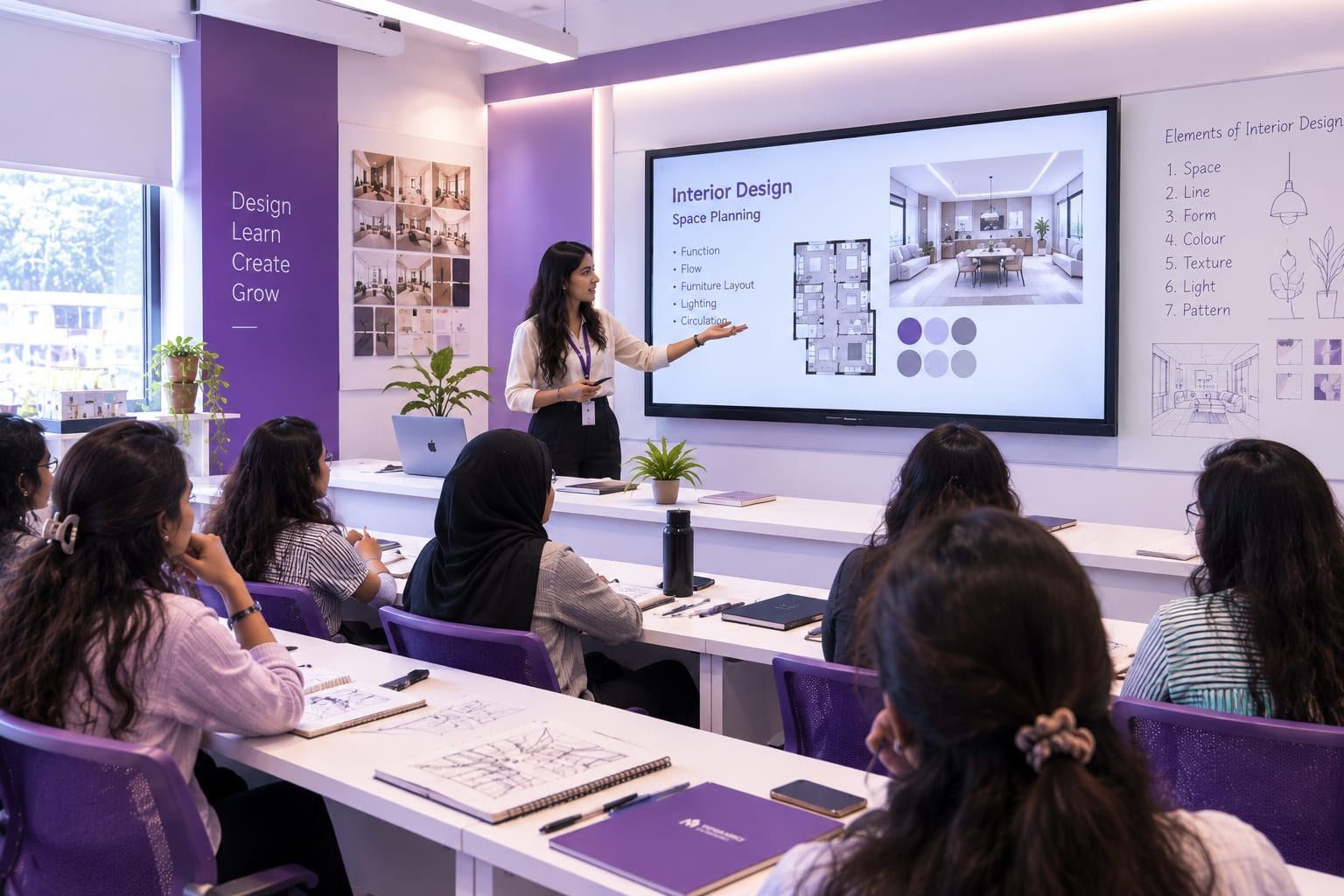
Have you ever walked into a room and wondered why it feels so welcoming? Perhaps it was the natural light, the arrangement of the furniture, the colours on the walls or the way every element seemed to belong. These are the details interior designers think about every day.
If you are new to the field, you do not need to know professional software or advanced design techniques before you begin. Start by understanding how spaces work, why design decisions matter and how creativity can be combined with practical planning.
What is interior design?
Interior design is the planning and organisation of indoor spaces to make them functional, comfortable and visually appealing. It brings together layout, lighting, colours, furniture, materials and the needs of the people who use a space.
01. Understanding Interior Design
Interior design is more than choosing furniture or decorating a room. It involves understanding a space and making thoughtful decisions about how it should look, feel and function.
An interior designer considers the size of a room, movement, storage requirements, lighting, materials and the client's budget. The goal is to create a space that supports everyday life while reflecting a suitable visual style.
Imagine designing a small bedroom. You need to consider the bed size, wardrobe position, walking space, lighting, electrical points and available storage. Choosing beautiful furniture is only one part of the process; planning how everything fits together is just as important.
Good interior design is not just about how a space looks. It is also about how well it works for the people who use it.
02. Interior Design vs Interior Decoration
Interior design and interior decoration are closely related, and their responsibilities can overlap. However, interior design generally includes broader planning and functional considerations.
| Interior Design | Interior Decoration |
|---|---|
| Focuses on planning spaces and improving how they function. | Focuses mainly on the visual styling and finishing of a space. |
| May involve layouts, measurements, drawings and coordination. | May involve furniture styling, accessories, fabrics and colours. |
| Considers usability, circulation, materials and client requirements. | Concentrates on creating a particular look or atmosphere. |
03. What Does an Interior Designer Actually Do?
The exact responsibilities depend on the project and the professional's role. Common tasks may include:
- Understanding the client: Discussing lifestyle, preferences, requirements and budget.
- Measuring spaces: Recording room dimensions and understanding existing conditions.
- Planning layouts: Arranging furniture, storage and movement paths.
- Selecting materials: Choosing flooring, finishes, fabrics and textures.
- Planning lighting: Considering daylight and suitable artificial lighting.
- Preparing drawings: Communicating layouts and technical details clearly.
- Creating 3D visuals: Showing clients how a proposed design could look.
- Coordinating projects: Working with clients, contractors and suppliers where required.
Beginners usually start by learning these processes and supporting experienced professionals before taking responsibility for more complex projects.
04. Can You Start Interior Design After 10th?
Yes, students who have completed 10th can explore interior design as a learning pathway. Some introductory and certificate courses may accept 10th-pass students, while other diploma or degree programmes require Plus Two or additional qualifications.
There is no single eligibility rule for every institution. Before enrolling, check the exact entry requirements, course duration, syllabus, practical training and qualification awarded.
Explore your interest
Observe homes, offices and other spaces. Notice furniture placement, colour combinations, lighting and how people move around a room.
Find a suitable beginner course
Compare courses that match your current qualification. Ask the provider whether 10th-pass students are eligible and what the course covers.
Learn the fundamentals
Start with measurements, layouts, colour theory, lighting, furniture planning and materials.
Practise design tools
Gradually learn drafting and 3D modelling software through lessons, assignments and regular practice.
Build your portfolio
Create sample layouts, room concepts and presentations that demonstrate your developing skills.
You do not have to master professional drawing or software before you start. Choose a course suitable for your qualification and build your knowledge step by step.
05. The Basic Principles of Interior Design
Understanding these principles gives beginners a foundation for making better design decisions.
Space and layout
Every room has physical limits. Good planning considers dimensions, furniture size and the space needed for people to move around comfortably.
Colour harmony
Colours influence the appearance and mood of a room. Designers consider how neutral shades, accent colours and contrasting tones work together.
Lighting
Lighting affects visibility, atmosphere and how materials appear. A design may combine natural light with general, task and accent lighting.
Balance and proportion
Furniture and decorative elements should suit the size of the room. Appropriate proportions help the space feel organised rather than overcrowded.
Materials and texture
Wood, stone, glass, fabrics and other finishes influence the appearance and practical performance of an interior. Durability and maintenance matter alongside style.
Functionality
A room should support the activities that take place in it. Storage, accessibility, circulation and everyday use should be considered alongside aesthetics.
06. Essential Skills to Develop
Interior design combines creative thinking with practical problem-solving. You can develop these abilities gradually through structured learning and regular practice.
Creative thinking
Generate ideas and explore different solutions for a space.
Observation
Notice details in lighting, furniture, materials and room layouts.
Measurements
Understand dimensions, scale and basic spatial planning.
Communication
Understand client requirements and explain design ideas clearly.
Problem-solving
Find practical solutions for limited space and everyday needs.
Digital skills
Use appropriate tools for drafting, modelling and presentations.
07. Interior Design Software to Explore
Software helps designers turn ideas into drawings, models and visual presentations. The right tools depend on the course and the kind of work you want to pursue.
| Software | Common application |
|---|---|
| AutoCAD | 2D drafting, floor plans and technical drawings. |
| SketchUp | Creating and editing 3D models. |
| Revit | Building information modelling and coordinated documentation. |
| 3ds Max | Detailed 3D modelling and visualisation workflows. |
| V-Ray | Rendering lighting, materials and realistic images. |
| Enscape / D5 Render | Real-time visualisation and design presentations. |
| Photoshop | Image editing and presentation boards. |
Start with the fundamentals and learn one tool at a time. Understanding layouts and design principles is just as important as learning software.
08. What Is the Scope of Interior Design?
Interior design is used across residential, commercial and hospitality environments. The types of projects available depend on local demand, construction and renovation activity, employers and the professional's skills.
Homes and apartments
Bedrooms, kitchens, living rooms, storage and complete residential spaces.
Offices and retail
Workplaces, shops, showrooms and other business environments.
Hotels and cafés
Restaurants, guest spaces and hospitality interiors.
Furniture and kitchens
Cabinetry, storage systems, furniture layouts and kitchen planning.
3D visualisation
Models and rendered images that communicate proposed design concepts.
Design documentation
CAD drawings, layouts, details and presentation materials.
Professionals may specialise in one area or work across different types of projects as their experience develops.
09. Career Opportunities in Interior Design
With suitable training, a developing portfolio and practical skills, beginners may explore several entry-level roles.
Junior interior designer
Assist with design concepts, layouts, material selection and documentation under appropriate supervision.
Interior CAD drafter
Prepare and update plans and technical drawings using drafting software.
3D visualiser
Create digital models and rendered images to communicate proposed interiors.
Interior design assistant
Support experienced designers with research, drawings, samples and coordination.
Kitchen and furniture design assistant
Help plan furniture, storage, cabinetry and kitchen layouts.
Freelance design professional
Freelancing may become an option after developing suitable skills, a portfolio, client communication and project-management abilities.
- Build a portfolio of clearly explained design projects.
- Learn software relevant to your chosen role.
- Seek practical exposure through internships or supervised work where available.
- Develop communication, measurement and coordination skills.
- Learn about materials, budgets and project requirements.
Job titles, responsibilities and salaries vary by employer, location, skills and experience. Completing a course does not automatically guarantee employment.
10. How to Build a Beginner Portfolio
A portfolio shows how you approach a design problem and explain your ideas. You can start developing one while studying, before working with real clients.
- Choose a sample space: Start with a bedroom, living room or compact apartment.
- Write a design brief: Explain the user's needs and the purpose of the space.
- Prepare a layout: Show the dimensions and furniture placement.
- Choose a design direction: Include colours, materials, lighting and references.
- Add drawings or visualisations: Show your work using the tools you have learned.
- Explain your decisions: Describe how the design meets the brief.
Label practice projects clearly as concepts. A thoughtful, well-explained project can demonstrate your developing skills better than images without context.
11. How to Choose the Right Interior Design Course
Before enrolling, compare the available courses according to your qualification, learning goals, budget and available time.
- Eligibility: Confirm whether 10th-pass or Plus Two students can apply.
- Syllabus: Check the design fundamentals and practical subjects covered.
- Software: Ask which applications are taught and at what level.
- Practical training: Review assignments, portfolio work and practical exposure.
- Faculty and facilities: Ask about the learning environment and support.
- Fees and duration: Understand the full fee structure and course length.
- Qualification: Verify the certificate or qualification awarded.
- Career support: Clarify what placement assistance or career guidance is provided.
Choose a course based on its suitability and learning experience, not only on advertisements or the number of software tools listed.
12. Frequently Asked Questions
Can I learn interior design after 10th?
Yes, some introductory and certificate courses accept 10th-pass students. Other programmes may require Plus Two or additional qualifications. Confirm the exact entry requirements with the institution.
Is interior design only about decorating rooms?
No. It may involve space planning, measurements, drawings, lighting, materials, furniture, visualisation and project coordination.
Do I need drawing skills before joining a course?
Drawing can help communicate ideas, but beginners can develop sketching and technical drawing skills through practice.
Do I need to know software in advance?
Not always. Some courses introduce software from the basics. Check the syllabus and entry requirements.
What jobs can beginners explore?
Depending on their training and skills, beginners may explore assistant, junior design, CAD drafting and 3D visualisation roles.
Can interior designers work independently?
Freelancing may be an option after gaining relevant skills, practical experience, a portfolio and the ability to manage client expectations.
Does completing a course guarantee a job?
No. Employment depends on skills, experience, portfolio quality, employer requirements and market conditions.
Your Interior Design Journey Starts with One Step.
Explore your interests, build your foundation and discover the learning options available at NovaArch Academy.
EXPLORE OUR COURSES →Questions about course eligibility? Contact our team.
Continue Reading
This article provides general educational and career information. Course eligibility varies by institution and programme. Confirm current requirements directly with the course provider.